

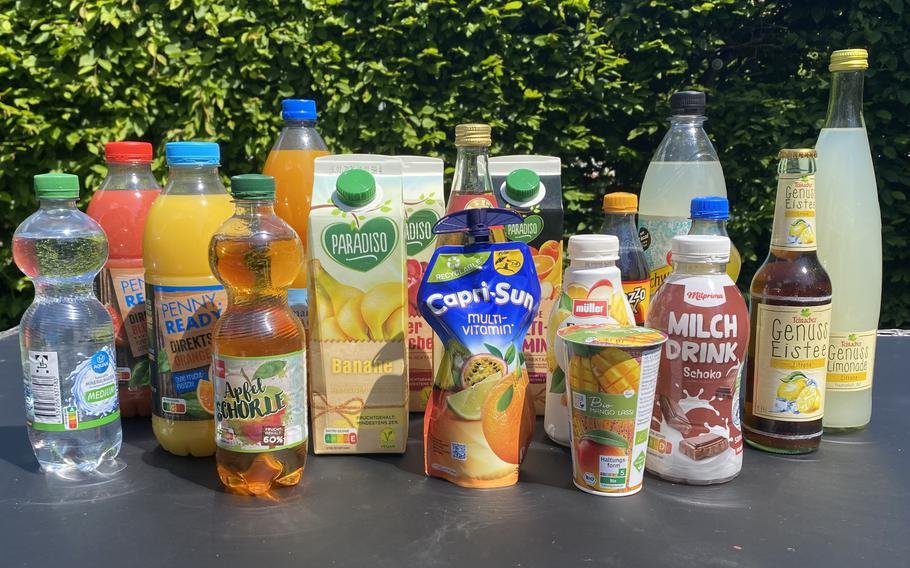
A can of cola sold in a Belgian convenience store, a bottle of lemonade stocked by a French wholesaler, and a pallet of energy drinks delivered to an Eastern European distributor may all have passed through Germany’s beverage supply chain.
Germany’s role in this trade is not based solely on how many drinks it manufactures. Its real advantage is the combination of central geography, industrial capacity, warehouse infrastructure, cross-border transport connections, European Union market access, and a mature network of beverage wholesalers.
Export rankings change according to the product category, reporting period, and destination market. Germany may not rank first for every individual soft drink classification. However, when the entire sourcing and distribution ecosystem is considered, few European countries offer the same balance of market scale, logistical reach, and commercial infrastructure.
That combination has made Germany one of Europe’s most important soft drink export and distribution hubs.
Germany Occupies a Strategic Position in Europe
Germany sits near the geographical and economic centre of the European market.
It shares borders with nine countries: Austria, Belgium, Czechia, Denmark, France, Luxembourg, the Netherlands, Poland, and Switzerland. This gives German suppliers direct road access to markets across Western, Central, Northern, and Eastern Europe.
A shipment leaving a warehouse in Germany can travel west toward France and Belgium, east toward Poland and Czechia, north toward Denmark, or south toward Austria and Switzerland. Established freight corridors then connect those neighbouring countries with the rest of the continent.
This location is especially important in beverage distribution because soft drinks are heavy relative to their commercial value. Transport costs can account for a meaningful share of the buyer’s total landed cost. Shorter and more efficient routes can therefore improve the economics of pallet and truckload orders.
Germany Trade & Invest identifies Germany as Europe’s largest logistics market and reports that the country provides access to more than 500 million European consumers. It also states that Germany accounts for more than one-fifth of the European logistics market.
For beverage buyers, Germany’s geographic position can support:
- Shorter transport routes to major EU markets
- Access to numerous freight carriers
- Faster replenishment of high-demand products
- Easier consolidation of multi-market shipments
- Flexible road, rail, inland-waterway, and sea connections
Geography does not eliminate freight expenses, but it gives German suppliers a strong starting point for managing them.
A Large Domestic Market Supports Export Capacity
Germany is not simply a transit country. It is the European Union’s largest national economy and one of its largest consumer markets.
A large domestic market creates consistent demand from supermarkets, wholesalers, convenience stores, hotels, restaurants, vending companies, and independent retailers. This supports substantial warehousing capacity and frequent movement of branded consumer products.
Beverage businesses operating in Germany are therefore not developing supply chains solely for occasional international transactions. They already participate in a high-volume domestic market that requires regular purchasing, storage, replenishment, and distribution.
This domestic activity helps support export operations in several ways.
First, high product turnover can improve access to recognised brands and commonly requested packaging formats. Second, regular domestic distribution encourages investment in warehouses, pallet-handling equipment, inventory systems, and transport relationships. Third, suppliers gain experience managing the documentation and operational requirements associated with high-volume beverage orders.
Export capacity grows from this established commercial foundation.
Germany’s Industrial Strength Extends Beyond Beverage Production
Soft drink exports depend on more than the liquid inside the container.
The beverage industry relies on a broad network of supporting manufacturers and service providers. These include businesses producing or managing:
- Aluminium cans
- Glass bottles
- PET containers
- Bottle caps and closures
- Cardboard trays
- Printed labels
- Shrink film
- Wooden and reusable pallets
- Filling machinery
- Warehouse equipment
- Quality-control systems
- Transport technology
Germany’s extensive industrial base supports many of these activities.
The country’s strength in manufacturing, engineering, packaging, automation, and logistics creates an environment in which beverage products can be produced, packed, stored, and moved efficiently.
This is a significant advantage because the reliability of a soft drink export programme depends on every part of the supply chain. A supplier may have access to the right beverage brands, but that access has limited value when pallet preparation is poor, warehouse controls are inconsistent, or transport coordination is unreliable.
Germany’s wider industrial ecosystem helps legitimate beverage businesses build more structured operations.
Europe’s Largest Logistics Market
Soft drinks present specific logistics challenges.
They are heavy, occupy considerable warehouse space, and can be damaged by poor palletisation or handling. Cans may become dented, bottles may leak, cardboard trays may weaken, and poorly wrapped pallets may shift during transport.
Successful beverage exports therefore require more than access to a delivery truck. They depend on a logistics system capable of moving dense commercial goods repeatedly and predictably.
Germany offers:
- An extensive motorway network
- Cross-border trucking corridors
- Major freight rail connections
- Inland waterways
- International airports
- Seaports
- Logistics parks
- Freight villages
- Specialised warehousing companies
Germany Trade & Invest reports that more than 60,000 logistics companies operate in Germany and describes the country as Europe’s largest logistics market. It also notes that Germany placed fourth among 139 economies in the World Bank’s 2023 Logistics Performance Index.
This infrastructure provides beverage exporters with different transport options depending on order size, destination, cost, and delivery expectations.
Road transport
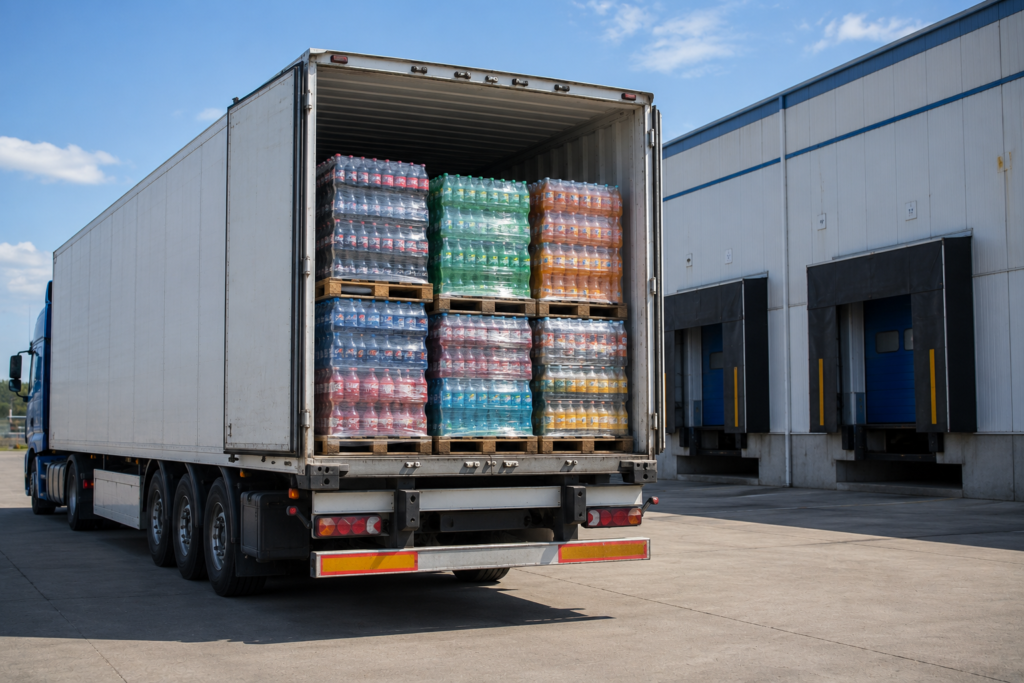
Road freight is particularly important for intra-European beverage distribution. It supports direct warehouse-to-warehouse delivery and can accommodate individual pallets, partial loads, and full truckloads.
Rail freight
Rail may be suitable for consolidated, long-distance shipments, especially when beverage cargo is connected with larger distribution networks.
Inland waterways
Germany’s rivers and canals provide another option for moving heavy cargo, particularly where inland terminals connect with industrial and port infrastructure.
Maritime transport
German and nearby European ports connect beverage exporters with destinations outside the EU. These shipments require additional customs, import, labelling, and documentation planning, but Germany’s position provides access to established international shipping routes.
The benefit is not that every shipment becomes simple. The benefit is that exporters can choose from a large and competitive logistics network.
Access to the European Union’s Single Market
Germany’s membership of the European Union strengthens its position as a regional distribution centre.
The EU single market is structured around the movement of goods, services, capital, and people between member countries. Goods moving between EU member states are generally not subject to internal customs duties.
For a beverage buyer located in another EU country, sourcing from Germany can therefore be more straightforward than importing the same products directly from a non-EU market.
However, free movement within the EU does not mean that beverage shipments are exempt from every rule. Buyers and suppliers may still need to consider:
- Value-added tax treatment
- Product labelling
- Packaging registration
- Deposit-return requirements
- Environmental obligations
- Product traceability
- Statistical reporting
- Proof of movement
- Commercial invoices
- Destination-country regulations
National packaging and deposit systems can differ even though the countries participate in the same single market.
A beverage packaged for sale in Germany may require different markings or registrations before it can be legally distributed in another country. Importers must therefore review the requirements of their own market before placing an order.
Even with these obligations, Germany’s EU location removes many of the customs barriers associated with sourcing goods from outside the union.
Strong Availability of International Beverage Brands
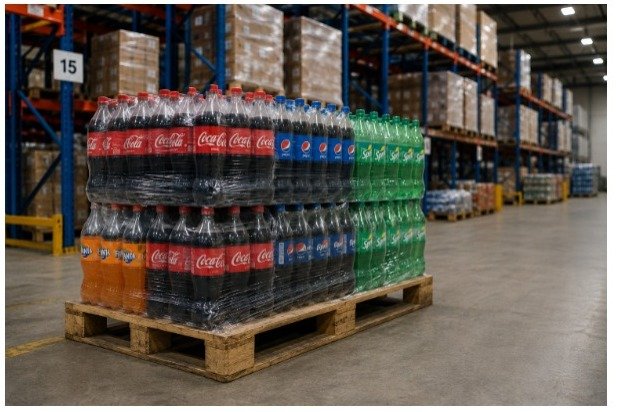
Germany’s large retail and wholesale markets support demand for internationally recognised soft drink brands.
Distributors commonly seek products such as:
- Coca-Cola
- Pepsi
- Sprite
- Fanta
- Energy drinks
- Carbonated beverages
- Bottled water
- Juice-based drinks
These products may be required in several commercial formats, including 250 ml cans, 330 ml cans, 500 ml bottles, one-litre bottles, 1.5-litre bottles, multipacks, retail-ready trays, and full pallets.
International buyers often prefer recognised brands because the products already have consumer awareness. A distributor introducing an established drink may face fewer market-entry challenges than one launching an unfamiliar product.
Germany’s active consumer market supports frequent movement of such products through manufacturers, authorised distribution systems, wholesalers, retailers, and export businesses.
Availability will always depend on brand, packaging format, batch, market restrictions, and current inventory. Nevertheless, sourcing from a mature beverage market can give importers access to a broader selection of established products.
Why Buyers Work With Specialist Beverage Wholesalers
Buying directly from a major manufacturer is not practical for every business.
Large producers may prioritise national distributors, supermarket groups, or customers capable of placing exceptionally high-volume orders. Independent importers, regional wholesalers, vending operators, and hospitality suppliers may need smaller or more flexible purchasing arrangements.
Specialist beverage wholesalers help bridge this gap.
A Germany-based German wholesale soft drink supplier such as Juicy GmbH supports B2B buyers seeking branded beverages, pallet supply, mixed-product sourcing, quotations, and delivery coordination from Germany.
Juicy GmbH’s website presents the company as a Leipzig-based supplier serving distributors, importers, retailers, wholesalers, hospitality businesses, and vending operators across Europe and selected international markets. Its listed product categories include Coca-Cola, Pepsi, Sprite, Fanta, energy drinks, and mixed beverage sourcing.
The role of a specialist wholesaler may include:
- Confirming available brands and formats
- Preparing detailed quotations
- Explaining cases-per-pallet configurations
- Coordinating full or mixed orders
- Providing product and batch information
- Supporting transport planning
- Clarifying delivery responsibilities
- Helping buyers prepare repeat orders
The strongest wholesalers do more than offer a price per case. They help buyers understand the complete commercial arrangement.
Pallet Efficiency Is Critical to Beverage Export Economics
Pallet configuration can have a major influence on the cost of a beverage shipment.
A buyer must consider more than the quoted price of each case. Important variables include:
- Number of units per case
- Number of cases per pallet
- Pallet dimensions
- Gross pallet weight
- Stackability
- Transport capacity
- Loading method
- Unloading requirements
- Deposit costs
- Final-mile delivery
An inefficiently configured order may leave unused truck space or create weight-distribution problems. It may also increase freight costs per case.
For this reason, professional buyers should request a quotation that clearly identifies both product pricing and logistics assumptions.
A useful wholesale quotation should show:
- Product name
- Package size
- Units per case
- Cases per pallet
- Number of pallets
- Total case quantity
- Product subtotal
- Transport cost
- Applicable VAT
- Delivery term
- Estimated delivery period
- Payment requirements
This gives the buyer a clearer understanding of the landed cost rather than only the warehouse price.
Mixed Pallets Can Support Smaller Distributors
Full single-product pallets are practical for high-volume buyers. However, not every distributor needs an entire pallet of one beverage.
A regional wholesaler may want to stock cola, orange drinks, lemon-lime beverages, and energy drinks without committing to a full pallet of every item.
Mixed-pallet sourcing can help such buyers:
- Test demand for several products
- Reduce overstocking risk
- Serve different customer groups
- Preserve warehouse space
- Diversify inventory
- Introduce new package sizes
Juicy GmbH describes mixed-pallet wholesale as a model in which several beverage stock-keeping units can be consolidated within one pallet or order. Availability and minimum quantities will naturally depend on the products and commercial arrangement.
Mixed sourcing is not always the cheapest arrangement. It can require additional warehouse handling, picking, documentation, and pallet preparation.
The buyer must therefore compare the flexibility of a mixed pallet with the lower handling cost that may be available for full single-product pallets.
German Suppliers Can Serve Markets Beyond Europe
Germany’s logistics infrastructure also supports beverage exports to non-European destinations.
Potential buyers may include importers and distributors in:
- Africa
- the Middle East
- Asia
- North America
- South America
- Australia
Juicy GmbH states that it supports wholesale beverage inquiries from European and selected international markets, including structured quotations and export coordination.
Exports beyond the EU generally require more extensive preparation than intra-EU sales.
The parties may need to confirm:
- Customs classification
- Export declarations
- Import licences
- Product registration
- Language requirements
- Nutrition labelling
- Certificates of origin
- Shipping documents
- Insurance
- Port handling
- Destination taxes
- Local deposit or packaging obligations
The importer is normally responsible for understanding the legal requirements of the destination market, while the exporter must provide accurate commercial and shipment documentation.
A quotation should clearly state which party is responsible for freight, insurance, customs clearance, duties, port charges, and final delivery.
Germany’s Packaging and Deposit Experience
Packaging has become one of the most important issues in European beverage distribution.
Germany has extensive experience with deposit-return systems for beverage containers. Consumers commonly pay a deposit when purchasing qualifying drinks and recover it when the container is returned through the appropriate system.
This has encouraged high levels of collection and made packaging recovery a familiar part of the country’s beverage market.
However, an importer cannot assume that a German deposit-marked container will automatically be accepted by another country’s return system. National schemes may apply different registration, labelling, barcode, and producer-responsibility requirements.
Before ordering, buyers should establish:
- Whether the package can be sold in the destination country
- Whether local registration is required
- Whether a different deposit symbol is necessary
- Who is responsible for environmental reporting
- Whether a local-language label is required
- Whether the importer must join a recovery scheme
Packaging compliance should be confirmed before goods are dispatched—not after they arrive.
Germany Compared With Other European Beverage Hubs
Germany is not the only strong European sourcing location. The Netherlands, France, Poland, Belgium, and other countries also play important roles in beverage production and trade.
| Factor | Germany | Netherlands | France | Poland |
| European location | Central access to multiple regions | Strong Western European location | Strong Western and Southern access | Strong Central and Eastern access |
| Domestic market | Very large | Smaller | Very large | Large and expanding |
| Logistics strength | Extensive road, rail, waterway, and warehouse network | Major port and re-export capability | Strong road, rail, and maritime network | Competitive road freight and warehousing |
| Industrial base | Broad and highly developed | Trade and logistics focused | Strong food and beverage production | Strong manufacturing base |
| EU market access | Yes | Yes | Yes | Yes |
| Main advantage | Balance of scale, location, industry, and logistics | Port-based trade | Domestic production and market size | Cost competitiveness and eastern access |
The Netherlands may be more attractive for certain port-centred operations. France has a major food-and-beverage manufacturing sector. Poland can offer competitive production and access to Eastern European markets.
Germany’s defining advantage is its balance. It combines market size, manufacturing depth, geographic centrality, and logistics capacity within one location.
What Buyers Should Verify Before Placing an Order
A German business address alone does not guarantee supplier reliability.
Buyers should conduct proper due diligence before transferring funds or confirming a large beverage order.
Verify the company
Check the legal company name, registration information, VAT details, physical address, contact information, and bank-account holder.
The information on the invoice should match the information supplied during the commercial discussion.
Request detailed product specifications
Confirm the exact brand, flavour, packaging format, units per case, cases per pallet, batch, and remaining shelf life.
Confirm stock availability
A product appearing on a website is not always proof that the requested quantity is ready for immediate dispatch.
Request written confirmation of availability and lead time.
Review the delivery terms
Establish who is responsible for loading, freight, insurance, customs clearance, taxes, unloading, and final delivery.
Check the destination requirements
Verify that the product labelling, packaging, deposit status, and documentation are acceptable in the buyer’s country.
Confirm all costs in writing
The quotation should identify the product cost, transportation charge, taxes, deposit, insurance, and any other applicable fee.
Unexpected charges appearing after payment or dispatch should be treated cautiously.
Use appropriate commercial safeguards
Large or first-time transactions may require additional safeguards, such as company verification, independent inspection, transport insurance, or payment structures proportionate to the commercial risk.
Due diligence is essential regardless of the supplier’s country.
Challenges Facing German Beverage Exporters
Germany’s strengths do not remove the challenges affecting the beverage industry.
Freight costs
Fuel prices, road tolls, driver availability, and transport demand can change quickly. Because beverages are heavy, freight volatility directly affects landed cost.
Energy expenses
Production, bottling, refrigeration, and warehousing can consume substantial energy.
Labour shortages
Logistics companies across Europe continue to face shortages of drivers and warehouse workers.
Packaging regulation
Deposit, recycling, recycled-content, and producer-responsibility requirements are becoming more demanding.
Market-specific labelling
A product legally sold in Germany may need additional labelling before distribution in another country.
Shelf-life management
Exporters must balance stock availability with the buyer’s requirement for adequate remaining shelf life.
Margin pressure
Beverage wholesale can be competitive. Small errors in freight calculation, pallet configuration, or tax treatment can materially reduce the margin on an order.
Strong suppliers respond through accurate quotations, better inventory control, transparent documentation, and efficient transport planning.
The Future of Germany’s Beverage Export Sector
Several trends are likely to shape Germany’s role in European soft drink distribution.
Digital procurement
Buyers increasingly expect online product information, faster quotations, electronic invoices, and clearer order-status communication.
Greater supply-chain visibility
Importers want accurate information about product origin, batch details, shelf life, warehouse location, and transport progress.
Flexible purchasing
Regional buyers may seek mixed pallets and consolidated loads that allow them to carry more product categories without excessive inventory.
Packaging accountability
Environmental registration and deposit compliance will become central procurement questions.
More efficient transport
Suppliers will need to improve pallet utilisation, load consolidation, route planning, and warehouse efficiency.
Wider international reach
German beverage exporters will continue targeting markets outside the EU, but success will depend on destination-specific regulatory knowledge and reliable logistics partners.
The strongest exporters will combine competitive sourcing with clear communication, complete documentation, and realistic delivery planning.
Conclusion
Germany’s importance to European soft drink exports cannot be explained by one statistic.
Its strength comes from the interaction of several structural advantages:
- A central location
- Borders with nine countries
- A large domestic consumer market
- A powerful industrial base
- Extensive logistics infrastructure
- Access to the EU single market
- A mature wholesale sector
- Strong road, rail, waterway, and port connections
Other European countries may lead in individual production categories or specific trade routes. Germany’s advantage is that it combines scale, location, infrastructure, and commercial capability in one market.
For importers, retailers, distributors, vending operators, and hospitality suppliers, Germany offers more than access to beverages. It provides an established environment for sourcing, consolidating, documenting, and transporting products across Europe and beyond.
That combination makes Germany one of Europe’s leading soft drink export hubs.
Frequently Asked Questions
Why is Germany an important soft drink export hub?
Germany combines a central European location, a large domestic market, extensive industrial capacity, and one of Europe’s strongest logistics networks.
Is Germany Europe’s largest exporter of soft drinks?
Not necessarily for every product category or reporting year. Rankings depend on product classifications and trade data. Germany’s strongest claim is its overall importance as a sourcing, wholesale, logistics, and distribution hub.
Which businesses purchase wholesale beverages from Germany?
Buyers include importers, distributors, supermarkets, independent retailers, vending operators, hospitality suppliers, convenience-store wholesalers, and other B2B beverage companies.
Are customs duties charged on drinks shipped from Germany to another EU country?
Internal customs duties are generally not charged on goods moving between EU member states. VAT, packaging, deposits, labelling, and reporting obligations may still apply.
Can buyers order mixed pallets from German wholesalers?
Some suppliers support mixed pallets or mixed-product orders. Availability depends on stock, minimum quantities, warehouse handling requirements, and the supplier’s commercial terms.
What should a wholesale beverage quotation include?
It should identify the product, package size, units per case, cases per pallet, total quantity, product cost, freight cost, taxes, delivery terms, payment requirements, and expected delivery period.
Can German beverage suppliers export outside Europe?
Yes. Non-EU exports are possible when the exporter and importer meet customs, product-registration, labelling, documentation, and destination-market requirements.
How should buyers verify a German beverage wholesaler?
Buyers should confirm the company’s legal identity, address, VAT and registration information, product availability, banking details, delivery terms, packaging compliance, and written quotation before making payment.
