

As brands like Gap and Mattel embrace entertainment to connect with consumers, an unlikely player in the movement, a personal injury law firm, is exploring what happens when businesses stop making commercials and start making movies.
For decades, the relationship between business and entertainment was fairly straightforward. Entertainment companies created the content, advertisers paid for access to the audience, and consumers watched the programming with commercial interruptions along the way.
That relationship has dramatically shifted.
Some of the world’s most recognizable brands are no longer content to simply advertise alongside entertainment. They want to create it. Gap Inc., for example, recently appointed former Paramount executive Pam Kaufman to a newly created chief entertainment officer position, signaling a broader effort to integrate fashion, music, storytelling, and entertainment into its business strategy.
Mattel has demonstrated just how far a familiar brand can travel beyond its original product category. The enormous cultural impact of Barbie illustrated the potential for a company’s intellectual property to become a major entertainment property.
The strategy represents an evolving philosophy in corporate marketing: rather than continually purchasing consumers’ attention, businesses are exploring ways to earn it through experiences people actually enjoy.
And while the movement has largely attracted attention through major retailers and consumer brands, an unlikely participant is pursuing a similar strategy in an industry rarely associated with Hollywood: personal injury law.
An Attorney With an Unconventional Idea and Background
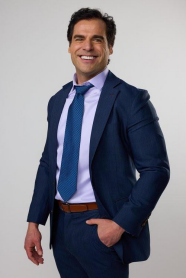
Michael Joe Silva’s career has followed a somewhat unusual path. After studying theater and law at Brigham Young University, Silva built a career representing personal injury clients in California and Utah. Yet his interest in performance and storytelling never entirely disappeared.
As the founder of Silva Injury Law, he recognized a challenge familiar to businesses operating in competitive industries. Much of the advertising looked and sounded remarkably similar.
Personal injury marketing, in particular, has long relied on a recognizable formula: billboards, television commercials, memorable slogans, and increasingly competitive digital advertising.
Silva began approaching the problem from a different perspective. Instead of figuring out how to create a more effective commercial, what if the firm created something people wanted to watch even when they weren’t looking for an attorney?
That question helped give rise to Silva Studios, an entertainment production operation supported by the law firm and devoted to developing original characters, cinematic comedy, and episodic storytelling.
Its most recognizable creation is Thunderclap, a flamboyant, professional-wrestling-inspired personality whose exaggerated bravado and theatrical antics are far removed from the traditional image of a personal injury attorney.
Thunderclap and the studio’s growing collection of characters have become the centerpiece of an entertainment strategy that treats storytelling as something more than a vehicle for delivering advertising messages.
The characters are designed to entertain first. The business benefits, in theory, come from what happens Silva Injury Law Founder Michael Silva afterward.
The Economics of Entertainment
What makes Silva Studios particularly interesting isn’t necessarily its comedic characters or elaborate productions. It’s the financial logic behind the operation.
Traditional independent filmmaking can be an uncertain business. Producers often need investors, distributors, licensing agreements, or other outside financing to support their work. The financial success of a project may depend on generating enough direct revenue to recover production costs.
Silva Studios operates with a different economic foundation.
Its entertainment is funded through Silva Injury Law, an established operating business that benefits from increased recognition, familiarity, and potential client relationships. That distinction changes how a production’s value can be measured.
A short film or episodic comedy doesn’t necessarily need to earn money through ticket sales or streaming revenue to provide a financial benefit to the company funding it.
Instead, its contribution might be reflected in branded searches, increased recognition within relevant communities, or prospective clients remembering Silva Injury Law when they eventually need legal representation.
The relationship creates a potentially self-reinforcing model and ancillary monetization through various platforms, endorsements, or relationships not directly related to the law firm.
The law firm supports the entertainment. The entertainment builds recognition for the brand. That recognition may contribute to new business, which in turn provides resources for future creative work.
It’s an interesting alternative to both traditional advertising and conventional independent film financing. Of course, the economics are not as simple as creating a popular video and waiting for new clients to arrive.
Producing cinematic entertainment requires significant investment in talent, equipment, locations, editing, and distribution. And measuring how entertainment influences purchasing decisions can be particularly difficult when the service being advertised is something consumers may only need once in their lives.
For Silva Studios, those challenges have made audience relevance an important part of the strategy.
Why a Million Views Might Not Be Worth as Much as You Think
In an online environment where popularity is often measured by followers, impressions, and viral videos, Silva Studios has increasingly emphasized a different set of priorities.
A video attracting a million views might be an impressive entertainment achievement. But if most of those viewers live outside the markets where Silva Injury Law operates, its immediate business value could be limited.
Conversely, an audience of considerably fewer viewers concentrated in communities served by the law firm may offer greater commercial relevance. That distinction raises a question businesses frequently struggle to answer: Is the objective to reach the largest possible audience, or the audience most likely to create meaningful value?
Silva Injury Law’s internal client-intake research suggests that more than half of its cases have encountered Silva-produced content.
That figure, which would require additional methodological detail for independent evaluation, does not necessarily mean the entertainment directly generated those clients.
It does, however, provide a potentially useful indicator of how the studio’s content intersects with the firm’s customer relationships.
Combined with information about branded searches, client inquiries, audience geography, and marketing expenditures, such data could help businesses better understand the economic return on their creative investments.
For an industry accustomed to evaluating advertising through impressions, clicks, and leads, that represents a more complicated—but potentially more revealing—measurement problem.
When a Commercial Becomes an Asset
One of the more intriguing distinctions between traditional advertising and original entertainment is what remains after the initial investment. A television commercial may stop appearing when its media budget expires. A digital advertisement generally requires continued spending to maintain distribution.
Original entertainment can behave differently.
A well-produced film, memorable character, or ongoing series may continue attracting viewers long after its initial release. Existing episodes can be rediscovered, shared, referenced, or used to introduce new audiences to other productions. Characters and storylines may also develop independent creative value.
For a company like Silva Studios, that means its productions have the potential to function as both marketing investments and reusable entertainment assets. The concept isn’t entirely new. Consumer brands have long developed recognizable mascots, characters, and branded entertainment.
What’s changing is the accessibility of professional production tools, digital distribution, and direct audience relationships. Businesses that once needed traditional media partners to reach consumers can now create and distribute original content through their own channels.
Whether that content generates sufficient business value to justify its costs remains an important question.
But the opportunity to develop an enduring library of entertainment, rather than repeatedly purchasing temporary advertising exposure, is attracting attention across industries.
Is More Content Really Better?
Perhaps one of the more surprising aspects of Silva Studios’ evolving philosophy is its resistance to the conventional wisdom that digital success requires constant production.
Social media businesses often operate under pressure to publish frequently, maintain engagement, and adapt to changing algorithms. Silva Studios is increasingly pursuing a different approach: fewer productions, cinematic quality, greater creative ambition, and more deliberate promotion.
The company has expanded into more elaborate cinematic projects, including Thunderstein, while exploring ways to build lasting value around its existing characters and stories.
The strategy reflects a broader challenge for businesses investing in entertainment.
High-quality content is expensive to produce. Maintaining an aggressive release schedule can strain creative resources, increase costs, and make long-term sustainability more difficult. If a smaller number of stronger productions can attract relevant audiences and remain valuable over time, the economics may favor quality and longevity over volume.
Whether that philosophy ultimately produces better financial results will depend on the studio’s ability to balance production expenses, audience development, and measurable business impact.
Could Professional Services Become the Next Entertainment Frontier?
The entertainment strategy employed by companies like Gap and Mattel makes intuitive sense. Fashion, toys, music, film, and popular culture have long shared overlapping audiences and identities.
“The hardest thing to find and to get is an audience these days,” said Alex Michael, senior managing director at the investment firm LionTree. “IP, in that sense, is the most valuable thing out there, and becoming more valuable because it’s attached to an audience.”
But legal services?
The connection is less obvious, which is precisely what makes Silva Studios an interesting case study. Unlike clothing or consumer products, personal injury legal representation isn’t a routine purchase. Most consumers don’t spend their time researching attorneys unless something unexpected happens.
That creates a challenge for traditional advertising: reaching a potential client now when legal services become relevant. Entertainment offers a different possibility. Rather than attempting to reach consumers only when they need an attorney, a firm can build recognition long before that need arises.
Someone who enjoys a Thunderclap production may remember the character, recognize the Silva name, or associate the law firm with entertainment they enjoyed.
Whether that familiarity eventually influences a hiring decision is difficult to prove, and entertainment cannot substitute for legal competence or client trust.
But it may create an introduction that traditional advertising struggles to achieve. The strategy could also have implications beyond personal injury law.
Financial advisory firms, insurance companies, healthcare organizations, real estate businesses, and other professional service providers all face some version of the same challenge: establishing recognition and relationships with people who may not need their services immediately.
The Business Behind the Story
Increasingly, the question is becoming what companies can create that people will actively choose to experience.
The distinction matters.
Advertising traditionally asks audiences to give a brand their attention. Entertainment offers something in return for it. Gap is exploring that relationship through fashion and culture. Mattel has demonstrated the potential of translating existing intellectual property into cinematic storytelling. Silva Studios is testing a similar philosophy in a less expected setting, using original entertainment to support a professional services business.
These organizations operate at dramatically different scales, and none provides a universal blueprint for other companies. But their approaches suggest that the lines separating entertainment, branding, and business development are becoming less rigid.
For Michael Silva, the experiment has brought together two careers that might otherwise have remained separate: the practice of law and the art of performance. For the wider business community, it presents an intriguing question about where advertising goes next.