

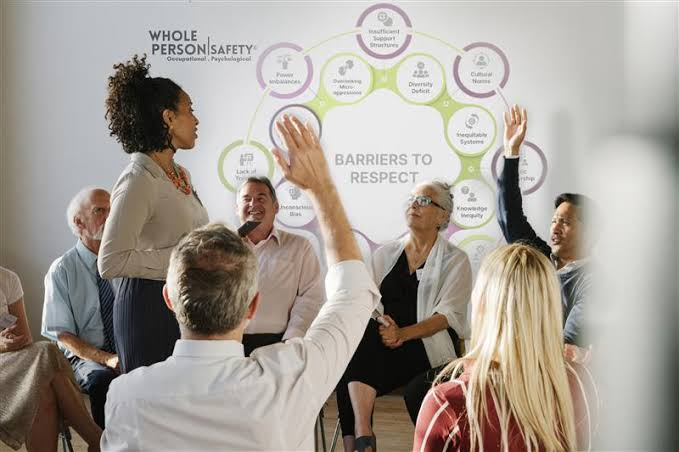
Workplace culture is shaped by how people respond when pressure rises. A tense exchange between coworkers, a frustrated customer interaction, or a disagreement about priorities can affect the people involved and those around them. When employees have practical ways to slow down these moments and communicate respectfully, they can address tension more constructively. Professional conflict de-escalation training helps teams practice those responses before they need them.
De-escalation does not mean ignoring a problem or asking employees to accept inappropriate behavior. It means staying present, lowering the intensity of an interaction where possible, and creating room to understand what is driving the tension. Teams can then address the issue with clearer communication and appropriate follow-up. When the approach is shared across roles, people have a more consistent way to handle difficult conversations.
Behavioral Practices That Encourage Respectful, Solution‑Focused Dialogue
De-escalation begins with awareness. Employees can learn to notice their own reactions—such as defensiveness, frustration, or the urge to interrupt—and pause before responding. A measured tone, open posture, and respectful distance can help keep an interaction from feeling more threatening or charged. These behaviors do not resolve the underlying concern on their own, but they can make it easier to continue the conversation.
Active listening is another core practice. Employees can focus on what the other person is saying, ask clarifying questions, and reflect back the main concern before offering a response. For instance, “It sounds like the change in timing made it difficult to finish your part of the project. Is that right?” checks understanding without assigning blame. Acknowledging another person’s perspective does not require agreeing with every claim; it shows that the concern has been heard.
Solution-focused dialogue also depends on clear, respectful language. Employees can describe a specific behavior or situation and explain its impact, rather than labeling a colleague or assuming intent. Open-ended questions can help uncover what each person needs and what practical next step might address the issue. If the discussion becomes too heated to continue productively, taking a pause or setting a boundary may be appropriate.
These are learnable skills, not personality traits. Through communication skills training for employees, teams can practice active listening, emotional self-regulation, empathetic responses, and clear expression. Practice can help employees apply those skills in everyday interactions as well as high-pressure moments.
Consistent Methods That Build Trust Across Teams
A healthy workplace culture depends in part on whether employees see respectful communication modeled consistently. If managers listen to concerns, explain decisions clearly, and address tension fairly, they help set expectations for how coworkers can engage with one another. When employees know that concerns can be raised without automatic blame or dismissal, they may be more willing to speak up early, while a problem is still manageable.
Consistency matters across teams, too. Employees who share a basic approach to tense conversations can coordinate more smoothly, especially when work crosses departmental or role boundaries. A shared vocabulary for listening, clarifying, and setting next steps can reduce confusion about how to respond when a disagreement arises. Managers can reinforce those habits by following up on commitments and addressing recurring patterns rather than treating each incident as unrelated.
De-escalation is one part of a broader conflict-management approach. Some situations may call for facilitated dialogue or support with an active dispute; others may benefit from training that helps people prepare for future disagreements. Conflict resolution training can help employees and leaders explore the needs and interests beneath a disagreement, communicate under pressure, and work toward constructive next steps.
When practiced consistently, de-escalation skills can support a culture where people are better prepared to address friction directly and respectfully. The goal is not to eliminate every disagreement. It is to help employees navigate difficult moments with greater awareness, keep dialogue focused on the issue, and work toward solutions that support stronger day-to-day collaboration.
