

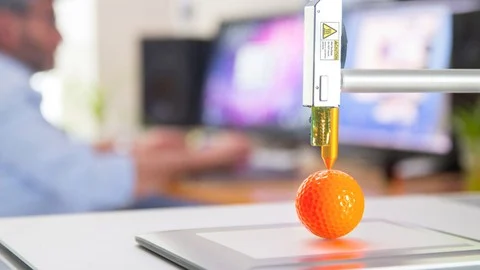
3D printing has become a practical tool for creating physical objects from digital designs. It is used in prototyping, small-scale production, and personal projects. Many men are interested in learning how to move from an idea to a finished product, but often lack a clear process.
In a digital environment, attention is divided across multiple activities. A person may explore design software, switch to unrelated content such as live cricket bet, and then return to a project without continuity. This fragmented approach slows progress. Structured courses help organize learning into clear stages.
Courses on 3D printing focus on the full workflow: creating a model, preparing it for printing, and producing a usable object. They emphasize understanding the process rather than relying on trial and error.
Why structured learning is important in 3D printing
3D printing involves several interconnected steps. Each stage affects the final result.
Without structure, common issues include:
- poor model design
- printing errors
- material waste
- weak or unusable parts
Courses provide a framework that connects each stage of the process.
Understanding the 3D printing workflow
The process of 3D printing can be divided into three main stages:
- creating a digital model
- preparing the model for printing
- executing the print
Courses explain how these stages interact.
Digital modeling
The first step is creating a 3D model.
Participants learn how to:
- design objects using modeling tools
- define dimensions and proportions
- ensure structural integrity
The quality of the model directly affects the print.
File preparation
Once a model is created, it must be prepared for printing.
Courses teach how to:
- convert models into printable formats
- set parameters such as layer height and speed
- generate instructions for the printer
This step is essential for accuracy.
Printing process
The final stage is producing the object.
Participants learn how to:
- set up the printer
- select appropriate materials
- monitor the printing process
Understanding this stage helps avoid errors.
Core modules in 3D printing courses
Effective courses include several key modules.
Design fundamentals
Participants learn how to design objects that can be printed successfully.
This includes:
- understanding geometry
- considering material behavior
- avoiding unsupported structures
Design decisions influence the outcome.
Material selection
Different materials have different properties.
Courses explain how to choose materials based on:
- strength requirements
- flexibility
- intended use
This ensures that the final product meets its purpose.
Printer operation
Operating a printer requires attention to detail.
Participants learn how to:
- calibrate the machine
- maintain equipment
- adjust settings
Proper operation improves reliability.
From idea to product
One of the main goals of these courses is to teach how to move from concept to finished object.
Defining the idea
The process begins with a clear concept.
Participants learn to:
- define the purpose of the object
- identify key requirements
- plan the design
This provides direction.
Iteration
Rarely does a design work perfectly on the first attempt.
Courses emphasize iteration.
Participants learn to:
- test prototypes
- identify issues
- refine the design
Iteration improves quality.
Final production
After refinement, the object can be produced.
Courses teach how to:
- optimize printing parameters
- ensure consistency
- prepare the object for use
This completes the process.
Common challenges in 3D printing
Courses address frequent problems.
Warping
Objects may deform during printing.
Participants learn how to manage temperature and adhesion.
Layer issues
Poor layer bonding can weaken the object.
Courses teach how to adjust settings.
Design flaws
Some models cannot be printed as designed.
Participants learn to modify designs.
Practical training methods
Effective courses include hands-on practice.
Guided projects
Participants work on specific tasks.
This helps apply concepts.
Troubleshooting exercises
Courses simulate common problems.
Participants learn how to solve them.
Feedback
Feedback helps improve both design and printing skills.
Skills developed through these courses
3D printing training develops several competencies.
Technical understanding
Participants learn how machines and materials interact.
Design thinking
Creating functional models requires planning and analysis.
Problem-solving
Participants learn to identify and fix issues.
Precision
Attention to detail improves results.
Application in different contexts
3D printing skills can be applied in various areas.
Prototyping
Creating early versions of products.
Custom solutions
Producing items tailored to specific needs.
Small-scale production
Manufacturing limited quantities of objects.
Choosing the right course
Selecting a course requires evaluating several factors.
Important considerations include:
- coverage of the full workflow
- balance between theory and practice
- clear structure
- access to hands-on experience
A course should provide practical skills.
From learning to independent work
To become effective, participants must apply what they learn.
This includes:
- working on personal projects
- experimenting with designs
- refining techniques
Practice builds confidence.
Conclusion
Courses for men on 3D printing provide a structured path from digital models to finished products. They focus on integrating design, preparation, and production into a coherent process.
By understanding each stage and practicing regularly, participants can move beyond basic experimentation to consistent results. In a context where attention is often divided, structured learning offers clarity and direction.
3D printing is not only about technology. It is about translating ideas into physical form. With the right approach, it becomes a practical and valuable skill.
