

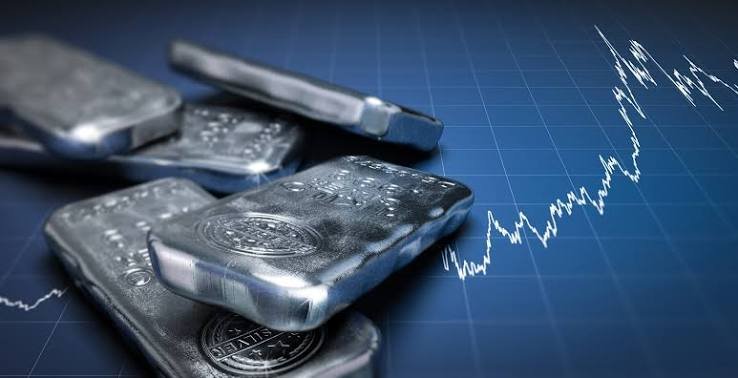
Silver can be affected by industrial demand, investor sentiment, interest rates, currency movements and developments across the wider precious-metals market. These factors can contribute to significant price movements, making an understanding of market mechanics particularly important for new traders.
Learning how silver trading works before committing capital can help distinguish active trading from simply buying silver as a longer-term investment.
How Does Silver Trading Work?
Silver trading is the process of gaining exposure to changes in silver prices through a physical or financial market. Depending on the trading route, a participant may buy an asset with the expectation that its value will increase, or take a position designed to benefit from a decline in price.
The mechanics depend on the instrument being used. Someone purchasing silver bullion generally takes ownership of physical metal, while someone using a financial product may gain exposure to silver prices without taking possession of the underlying metal.
This distinction affects several practical considerations, including transaction costs, liquidity, storage, ownership rights and the way positions are opened and closed.
Silver can also be traded over different time horizons. Some market participants focus on short-term price movements, while others hold silver exposure for longer periods as part of a broader investment approach.
For beginners, understanding exactly what is being bought or sold is therefore an important first step. The term “silver trading” can refer to several different methods, and the risks and costs are not necessarily the same across them.
Silver Trading vs Buying Silver
Buying silver and silver trading are related but generally involve different objectives.
Someone buying silver bullion may intend to hold the metal for months or years as part of a longer-term investment strategy. The focus is usually on maintaining exposure to silver rather than making frequent decisions based on short-term price movements.
Trading tends to involve more active decisions. A trader may analyse price charts, economic developments, market sentiment and other indicators before opening or closing a position.
| Factor | Silver Trading | Buying Silver for Investment |
| Main objective | Capture price movements | Maintain longer-term exposureto silver |
| Typical holdingperiod | Often shorter term | Often longer term |
| Ownership | Depends on the trading method | Physical ownership may beavailable |
| Keyconsiderations | Timing, execution, liquidity andrisk | Price, premiums, storage andresale |
| Price sensitivity | Often focused on short-termmovements | Generally assessed over a longerhorizon |
Neither approach is automatically more appropriate. The choice depends on whether the objective is active exposure to price movements or longer-term ownership of the metal.
What Can Influence Silver Prices?
Understanding what drives silver prices is central to learning how to trade silver.
Silver has both industrial and investment demand, which means its price can respond to developments in several parts of the global economy. Industrial activity can influence physical demand, while investor sentiment can affect buying and selling across financial markets.
Several factors may influence silver prices:
· Economic conditions: Changes in economic activity can affect industrial demand and investor expectations.
· Interest rates: Changes in interest rates can influence the relative attractiveness of precious metals, which do not generate interest income.
· Currency movements: Silver is commonly quoted in US dollars, so changes in the dollar can affect its price dynamics and the cost for investors using other currencies.
· Gold prices: Silver is part of the broader precious-metals market, meaning movements in gold can sometimes influence sentiment toward silver.
· Industrial demand: Silver is used in a range of industrial applications, so changes in manufacturing activity and technology demand can affect market expectations.
· Market sentiment: Expectations surrounding inflation, economic uncertainty and financial-market conditions can influence precious-metals demand.
These factors do not have a fixed or predictable effect on silver prices. A trader therefore needs to consider the broader market environment rather than relying on a single indicator.
How to Start Trading Silver
The first practical step in silver trading is deciding what type of exposure is appropriate. A beginner may be considering physical silver ownership, a financial instrument linked to silver prices, or another form of market exposure.
The next step is understanding how the chosen route operates. This includes knowing how transactions are executed, what fees or spreads apply, how positions are closed and whether the participant actually owns physical silver.
A sensible starting point is to learn the mechanics of the chosen market before committing significant capital. Paper trading or other forms of practice may also help beginners understand order execution and price movements without immediately taking the same level of financial exposure.
The amount committed should also reflect the individual’s financial circumstances and tolerance for potential losses. Silver prices can move substantially over relatively short periods, so treating trading as risk-free or predictable can lead to inappropriate decisions.
Choosing an Account and Trading Route
The account required depends on how silver exposure will be obtained.
A person purchasing physical silver may buy silver bullion through a dealer or precious-metals provider. Someone seeking financial exposure may instead use an account that provides access to silver-related financial instruments.
Before opening an account, it is useful to establish:
· what asset or instrument is actually being purchased;
· whether physical silver ownership is involved;
· how orders are executed;
· what fees, premiums or spreads apply;
· whether minimum transaction sizes apply;
· how positions can be closed or sold.
For investors comparing physical ownership routes, ISA Bullion is one example of a precious-metals provider that can be researched alongside other options. The relevant comparison points are the ownership structure, pricing, transaction terms and other conditions rather than convenience alone.
Beginners should also understand whether leverage is involved. Leverage can increase the size of market exposure relative to the capital committed, but it can also magnify losses when the market moves against a position.
Understanding Pricing and Execution
A silver trade is not necessarily completed at the exact price displayed on a market chart. The final transaction price can depend on factors such as the bid-ask spread, liquidity, order type and the specific instrument being traded.
Physical silver can involve additional premiums above the underlying spot price. These premiums may reflect factors such as fabrication, distribution and other costs associated with the physical product.
The spot price represents a reference price for silver in the broader market, but the price available to an individual buyer or trader can differ.
Several terms are particularly useful for beginners:
· Bid: The price at which a market participant is prepared to buy.
· Ask: The price at which a market participant is prepared to sell.
· Spread: The difference between the bid and ask prices.
· Premium: An additional amount paid above the underlying metal value, particularly relevant to physical bullion.
· Execution: The process through which an order is completed.
These concepts matter because transaction costs can affect the outcome of a position. A trade may need to move in the expected direction by a certain amount before the participant has covered the initial spread and other applicable costs.
Silver Trading Strategies by Market Condition
There is no single silver trading strategy that is suitable for every market environment. A method that may be useful during a sustained trend can behave differently when prices move sideways or volatility increases.
Beginners should therefore consider market conditions alongside strategy selection rather than assuming that one approach will work consistently.
Trend and Momentum Conditions
In a trending market, traders may look for evidence that an established upward or downward movement is continuing.
Trend-based approaches can involve analysing price patterns, support and resistance levels, moving averages or other technical indicators. Momentum strategies similarly attempt to identify periods when buying or selling pressure is strengthening.
The principal risk is entering after a substantial price movement has already taken place. A market can reverse unexpectedly when economic data, monetary-policy expectations or other developments change market sentiment.
A structured approach therefore generally involves defining the conditions for entering a position as well as the circumstances under which it will be closed.
Volatility and Risk Management
Silver can experience significant price movements, making risk management an important part of trading.
Rather than focusing only on the potential return from a position, traders should consider how much capital could be lost if the market moves in the opposite direction.
Risk-management techniques may include limiting the amount of capital committed to an individual position, establishing predetermined exit conditions, avoiding excessive leverage and maintaining sufficient diversification.
It can also be useful to keep trading capital separate from money required for essential living expenses. This helps prevent short-term market movements from creating pressure to make decisions based on immediate financial needs.
Risk management does not eliminate losses or guarantee a particular trading outcome. Its purpose is to limit the potential impact of an unsuccessful position and make the overall approach more deliberate.
Common Silver Trading Mistakes
Beginners often focus heavily on predicting the next silver price movement while paying less attention to the mechanics of managing a position.
Trading without a defined plan. Entering a position because prices are moving rapidly can encourage impulsive decisions.
Ignoring transaction costs. Spreads, premiums and other charges can affect the outcome of frequent trading, particularly when individual price movements are relatively small.
Using too much leverage. Leverage can magnify the effect of both gains and losses, increasing the risk associated with relatively small market movements.
Confusing investment with trading. Buying physical silver for longer-term ownership is different from actively trading short-term price movements.
Following short-term market noise. Not every price change represents a meaningful shift in the underlying silver market.
Failing to manage losing positions. Holding a position simply because it has moved against expectations can allow a manageable loss to become substantially larger.
A disciplined approach begins with understanding the trade before it is opened rather than deciding how to respond only after the market has moved.
Frequently Asked Questions
Is silver trading suitable for beginners?
Silver trading can be accessible to beginners, but understanding the market, trading instrument, costs and potential losses is important before committing capital.
How does silver trading differ from buying silver?
Silver trading generally focuses on price movements and active position management, while buying silver can involve acquiring physical bullion for longer-term ownership.
Is silver a good investment?
Whether silver is a good investment depends on an individual’s objectives, risk tolerance, time horizon and broader portfolio. Silver can provide exposure to precious metals, but its price can also be volatile.
How can someone invest in silver?
Investors can gain exposure to silver through physical bullion and various financial instruments, depending on the market and products available in their jurisdiction.
What affects the price of silver?
Silver prices can be influenced by industrial demand, investment demand, interest rates, currency movements, gold prices, economic conditions and broader market sentiment.
Is buying silver the same as silver trading?
No. Buying silver generally refers to acquiring the metal or an asset for ownership or longer-term exposure, while silver trading usually involves more active decisions based on expected price movements.
What is the silver spot price?
The silver spot price is a reference market price for silver used in the broader precious-metals market. The actual price paid for physical silver may differ because of premiums and transaction costs.
Does silver trading involve leverage?
Some financial silver trading methods can involve leverage. Leverage increases market exposure but can also magnify losses, so beginners should understand how it works before using it.
What are the main costs involved in silver trading?
Potential costs include bid-ask spreads, commissions, platform charges and, for physical silver, premiums above the underlying spot price and possible storage or delivery costs.
Can silver prices fall quickly?
Yes. Silver prices can move in either direction and may experience periods of elevated volatility. Traders should account for the possibility of rapid adverse price movements when assessing risk.
Conclusion
Learning how to trade silver starts with understanding the difference between active trading and buying silver as a longer-term investment. Beginners also need to understand their chosen trading route, how prices are formed, what factors influence the market and how transaction costs affect the outcome of a position.
Strategy selection should reflect market conditions rather than assuming that one method will work in every environment. Periods of stronger trends may present different conditions from sideways markets or periods of elevated volatility.
Silver trading ultimately involves uncertainty. A defined process, realistic assessment of costs and appropriate risk management can help traders make more deliberate decisions without relying on the assumption that every price movement can be predicted.
