

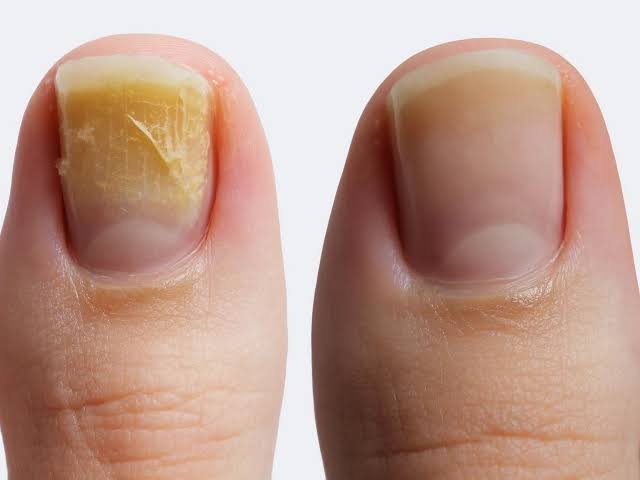
Laser toenail fungus treatment clears infected nail tissue faster and with fewer compliance problems than topical medication, and it’s the option Naples Podiatrist (Family Foot & Leg Center, PA) offers across its Southwest Florida locations in Naples, Estero, Fort Myers, Cape Coral, Port Charlotte, and Sarasota. Topical medication still has a place for mild, early-stage infections and for patients who want to avoid an office visit. Neither option guarantees a cure in a single pass, and both require patience while a new, clear nail grows in.
Toenail fungus (onychomycosis) is stubborn because the fungus lives under the nail plate, where topical creams and lacquers have a hard time penetrating consistently. This comparison breaks down laser toenail fungus treatment against over-the-counter and prescription topical medication across the factors patients actually ask about: effectiveness, time commitment, cost, side effects, and who should pick which option. The goal is a straight answer, not a sales pitch for either approach.
Verdict Summary
Effectiveness: Laser treatment — penetrates the nail bed directly instead of relying on the medication soaking through keratin.
Speed of visible improvement: Laser treatment — most patients see a single in-office session, not months of daily self-application.
Upfront cost: Topical medication — over-the-counter antifungal lacquers and creams cost far less per unit than an in-office laser session.
Convenience for mild cases: Tie — a mild, early infection on one nail responds reasonably well to either approach if applied consistently.
Consistency of use: Laser treatment — one or a handful of sessions remove the daily-compliance problem that undermines most topical regimens.
Side effect profile: Tie — both are low-risk; topical products can irritate skin, laser sessions can cause brief warmth or mild discomfort.
How We Compared
The dimensions above reflect what patients ask a podiatrist before choosing a treatment path: does it work, how fast, what does it cost, and what’s the catch. Laser toenail fungus treatment and topical medication were evaluated against each other rather than against a single competing brand, since topical options span dozens of over-the-counter and prescription products rather than one named alternative.
Quick Overviews
Laser toenail fungus treatment, as performed at Naples Podiatrist locations in Naples, Estero, Fort Myers, Cape Coral, Port Charlotte, and Sarasota, uses an FDA-cleared laser device to target the fungal organism living under and within the nail plate. The treatment is done in-office, typically takes well under an hour, and does not require anesthesia. It’s suited to patients who have tried topical products without success, who have thickened or discolored nails across multiple toes, or who simply want the shortest path to a clear nail without months of daily application. Details on how laser treatment works and laser treatment cost outline what a session involves and what it runs before insurance. The main limitation: a new nail still has to grow out clear, which takes months regardless of the technology, and severe, long-neglected infections may need more than one session.
Topical medication covers over-the-counter antifungal creams and lacquers as well as prescription options like ciclopirox or efinaconazole solutions. These are applied daily, often for many months, and require filing or thinning the nail to help the medication penetrate. Published clinical trial data on topical lacquers consistently shows modest complete-cure rates compared to oral or device-based treatment, which is why dermatology and podiatry literature position topical products as a first-line option mainly for mild, early-stage infections. The appeal is low cost and no appointment. The drawback is the daily routine most people abandon before the nail fully clears.
Effectiveness: Laser Treatment vs Topical Medication
Effectiveness comes down to whether the antifungal agent actually reaches the fungus, which lives beneath the nail plate rather than on its surface.
Laser treatment bypasses the penetration problem entirely by delivering energy through the nail to the fungal organism underneath, which is the mechanism cited across the laser treatment overview. Topical medication depends on the active ingredient diffusing through a thick, often damaged nail plate, which is slower and less reliable the more advanced the infection.
Winner: Laser treatment because it addresses the fungus directly rather than depending on penetration through keratin, especially in moderate to advanced cases.
Time Commitment: Laser Treatment vs Topical Medication
This dimension is about how much the patient has to do, and for how long, before seeing a difference.
Laser sessions are a one-time or occasional in-office visit; there’s no daily routine to maintain. Topical medication requires nightly or twice-daily application for months, with compliance dropping off as patients lose patience waiting for a visible change in the nail.
Winner: Laser treatment because it removes the daily-compliance burden that causes most topical regimens to underperform in real-world use, not just in a lab setting.
Cost: Laser Treatment vs Topical Medication
Cost matters most for patients deciding between a quick fix and a cheaper, slower one.
Over-the-counter topical antifungals are inexpensive per bottle, and prescription topicals are usually cheaper per visit than a laser session. Laser toenail fungus treatment carries a higher per-session cost, detailed on the laser treatment cost page, though patients avoid the cumulative cost of repeated product purchases over many months of topical use that may not fully clear the nail.
Winner: Topical medication for upfront, out-of-pocket cost on a single nail with a mild infection.
Side Effects and Safety: Laser Treatment vs Topical Medication
Both approaches carry a low risk profile, but the nature of the risk differs.
Laser treatment can cause brief warmth or mild discomfort during the session with no recovery downtime. Topical medications can cause localized skin irritation, especially with prolonged daily contact, and prescription options occasionally carry other label warnings worth reviewing with a provider.
Tie because neither option carries meaningful risk for most patients when used or performed as directed.
Who Should Choose Which Option
A single mild nail with early discoloration and no thickening is a reasonable candidate for topical medication first, especially for someone willing to apply it daily for several months without skipping.
Multiple affected nails, thickened or crumbling nails, or a history of topical treatment that didn’t clear the infection point toward laser toenail fungus treatment as the more time-efficient path. Patients comparing prescription vs over-the-counter options before committing to either route can weigh both before scheduling.
Patients who’ve already tried one or more topical products without a clear nail by the following year are typically better served moving to laser rather than restarting another months-long topical cycle.
Anyone unsure which category they fall into is better off getting the nail evaluated in person rather than guessing from a drugstore shelf, since what looks like fungus can sometimes be a different nail condition entirely.
FAQ
Does laser toenail fungus treatment hurt?
Most patients report mild warmth during the session and no pain afterward; there’s no anesthesia or recovery period required.
How many laser sessions does it take to clear toenail fungus?
It varies by how advanced the infection is; some patients need a single session while more severe or long-standing cases may need additional visits, which is covered in detail on whether laser treatment is worth it.
Can toenail fungus come back after laser treatment?
Yes, reinfection is possible, particularly if shoes and socks aren’t treated or if the fungus was present elsewhere, which is addressed on whether fungus can return after laser treatment.
Is topical medication ever enough on its own?
For a single mild, early infection, yes, especially with consistent daily use over several months; for thickened or multiple affected nails, topical alone often isn’t enough.
Does insurance cover laser toenail fungus treatment?
Coverage varies by plan and is often considered cosmetic rather than medically necessary; checking with the provider’s office before scheduling is the most reliable way to find out.
How long until a nail looks normal again after either treatment?
A toenail fully replaces itself over roughly 9 to 12 months, so even a successful treatment, laser or topical, means waiting for new, clear nail growth to reach the tip.
Conclusion
Laser toenail fungus treatment wins on effectiveness and time commitment because it reaches the fungus directly and doesn’t depend on months of flawless daily compliance, while topical medication wins on upfront cost for mild, early-stage cases. For anyone with thickened, discolored nails across more than one toe, or a history of topical treatment that didn’t work, laser toenail fungus treatment at Naples Podiatrist is the faster, more reliable path to a clear nail in 2026. Patients still weighing the decision can review toenail fungus treatment in Naples or get evaluated directly through toenail fungus treatment laser before deciding which route fits their nail, their timeline, and their budget for the year ahead.
