


Missing a tooth can affect more than your smile. It may make chewing difficult, influence your speech, and change how you feel about your appearance. Fortunately, modern dentistry offers several ways to replace missing teeth and restore both function and confidence.
A professional Tooth Replacement Service can help you understand which option is appropriate for your oral health, lifestyle, and long-term goals. From dental implants and bridges to dentures, the right solution depends on factors such as the number of missing teeth, jawbone health, gum condition, and personal preferences.
What Is Tooth Replacement?
Tooth Replacement Service involves restoring one or more missing teeth with an artificial tooth or dental prosthesis. The goal is not simply to fill a gap in your smile but also to help restore normal oral function.
Depending on your situation, a dentist may recommend a fixed or removable solution.
Why Replace Missing Teeth?
Replacing missing teeth can provide several potential benefits, including:
- Improved chewing ability
- Better speech and pronunciation
- Support for surrounding teeth
- Improved smile appearance
- Greater confidence
- Help maintaining proper bite alignment
Leaving a missing tooth untreated may also allow neighboring teeth to shift into the empty space, potentially affecting your bite and making future dental treatment more complicated.
Common Tooth Replacement Options
There is no single solution that works for everyone. During a consultation, your dentist can evaluate your oral health and recommend an appropriate treatment.
1. Dental Implants
Dental implants are designed to replace the root portion of a missing tooth. A titanium implant is placed into the jawbone and allowed to integrate with the surrounding bone. A dental crown is then attached to restore the visible portion of the tooth.
Implants are often chosen because they provide a stable, natural-looking replacement and do not require removable appliances.
Benefits of Dental Implants
Dental implants may offer:
- A secure and stable fit
- A natural-looking appearance
- Improved chewing function
- Long-term durability with proper care
- Support for jawbone preservation
However, implant treatment requires adequate bone support and healthy oral tissues. Some patients may need additional procedures before implant placement.
2. Dental Bridges
A dental bridge can replace one or more missing teeth by using neighboring teeth or implants as support. The artificial tooth, known as a pontic, fills the space created by the missing tooth.
Bridges are fixed in place and can provide an alternative for patients who may not be candidates for implants or who prefer another treatment approach.
Benefits of Dental Bridges
A bridge may help restore:
- Chewing function
- Smile appearance
- Speech
- The space between surrounding teeth
Your dentist can determine whether a traditional or implant-supported bridge is more appropriate for your situation.
3. Dentures
Dentures are removable appliances designed to replace multiple missing teeth or an entire arch of teeth. Depending on your needs, you may receive partial dentures or complete dentures.
Modern dentures can be customized to provide a more natural appearance while helping restore basic oral function.
Benefits of Dentures
Dentures can offer:
- A removable tooth replacement option
- Restoration of multiple missing teeth
- Improved smile appearance
- A potentially more affordable solution for some patients
Proper fitting and regular adjustments are important for maintaining comfort and function.
What Are the Benefits of a Tooth Replacement Service?
A professional Tooth Replacement Service provides more than an artificial tooth. It involves evaluating your individual oral health and creating a treatment plan designed around your needs.
Restores Oral Function
Missing teeth can make it difficult to chew certain foods. Replacing them can help restore your ability to eat more comfortably.
Enhances Your Smile
A missing tooth can create an obvious gap. A customized restoration can be designed to complement your natural teeth and improve the overall appearance of your smile.
Supports Proper Bite Alignment
When a tooth is missing, surrounding teeth may gradually move toward the empty space. Replacing the tooth can help maintain a more balanced dental arrangement.
Can Improve Confidence
For many people, restoring missing teeth can make them feel more comfortable smiling, speaking, and interacting with others.
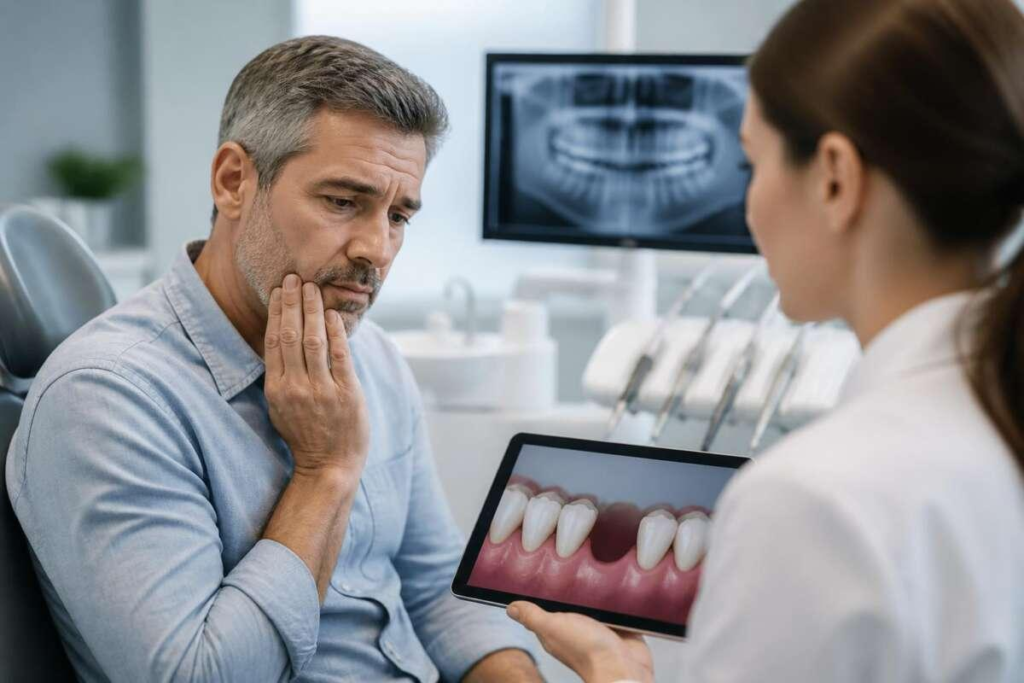
What to Expect During a Tooth Replacement Service
The treatment process depends on which replacement option you choose.
Step 1: Initial Consultation
Your dentist will examine your teeth, gums, and jawbone. Dental X-rays or other imaging may be used to evaluate your oral structures and determine the most suitable treatment.
You should also discuss your dental history, concerns, expectations, and budget during this appointment.
Step 2: Treatment Planning
Once your dentist understands your needs, they can explain the available options. Your treatment plan may include one procedure or several stages depending on the condition of your teeth and gums.
If you have an infection, gum disease, or significant bone loss, these issues may need to be addressed before replacement treatment begins.
Step 3: Tooth Replacement Treatment
The actual procedure varies according to the selected solution. A bridge or denture may be completed relatively quickly, while dental implants generally require multiple appointments and a healing period.
Your dentist should explain the expected timeline before treatment begins.
Step 4: Follow-Up and Maintenance
After receiving your replacement teeth, follow your dentist’s care instructions carefully. Regular dental examinations can help your dental team monitor the restoration and your overall oral health.
How to Choose the Right Tooth Replacement Option
Choosing the appropriate solution requires consideration of several factors.
Consider the Number of Missing Teeth
Replacing a single tooth may require a different approach than replacing several teeth or an entire arch.
Evaluate Your Oral Health
Healthy gums and sufficient jawbone support are important for certain treatments, particularly dental implants.
Think About Long-Term Goals
Consider how important factors such as permanence, appearance, comfort, maintenance, and treatment time are to you.
Discuss Your Budget
Treatment costs can vary significantly depending on the type of restoration and the complexity of your case. Ask for a detailed estimate and discuss insurance or financing options if available.
How to Care for Replacement Teeth
Good oral hygiene remains important after tooth replacement. Brush regularly, clean between your teeth, and follow your dentist’s recommendations for caring for your specific restoration.
If you have removable dentures, clean them according to your dentist’s instructions and handle them carefully. Patients with implants or bridges should pay particular attention to cleaning around the restoration and gumline.
Regular dental appointments are also important for checking the condition of your replacement teeth and remaining natural teeth.
Final Thoughts
Choosing a Tooth Replacement Service is an important step toward restoring your smile and oral function. Dental implants, bridges, and dentures each offer different advantages, and the best option depends on your individual needs.
Before making a decision, schedule a consultation with a qualified dental professional. Ask about your treatment options, expected timeline, maintenance requirements, potential risks, and total cost. A personalized evaluation can help you select a solution that supports both your current needs and long-term oral health.
